20 Definitive Reasons For Deciding On Anti-Termite Control Services In Jakarta
Wiki Article
Post-Construction Barriers Against Termites In Jakarta
Most Jakarta homeowners think that termite barriers are something you should put in place prior to the time concrete is laid or walls are raised. This is an expensive belief. This belief convinces property owner that, once the slab has been poured and poured, they have no alternative but chemical trenching - repeated applications of terminicide, which degrades in Jakarta's high humidity and alkaline soil. Physical barriers that retrofit to are attached mechanically to foundations already in place and erected through perimeter excavation have made this notion obsolete. The barriers used after construction are not inferior to those used before construction. They are different technology that have different performance profiles. Jakarta anti-termite companies that are unable to provide both will be excluded from the fastest growing segment of the market for urban pests.
1. There are barriers to retrofitting, and they are present
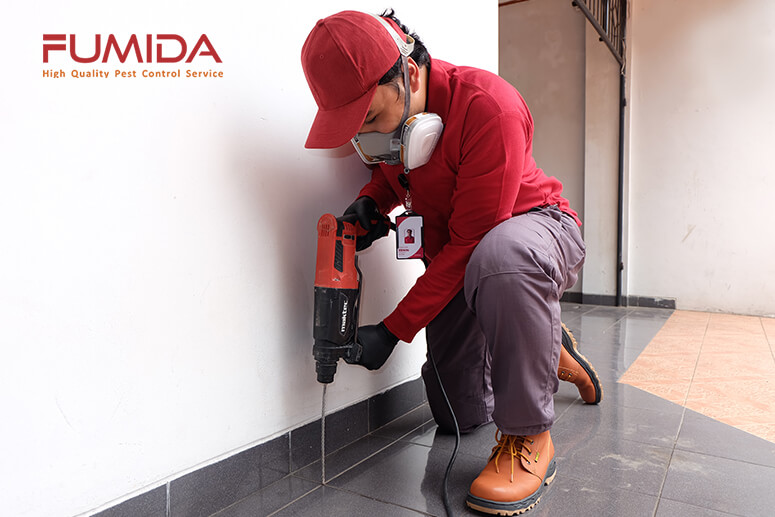
You can put in Polymer membranes made of stainless steel that contain slow-release insecticides, or sandgranules on existing foundations. This requires excavation around the perimeter, soil removal as well as the construction of barriers, and then mechanical fixing to the wall. It's costly, disruptive and permanent. Jakarta exterminators who claim to tell their clients they have only one option, annual liquid injections are misrepresenting the current technology.
2. Liquid Barriers Degrade; Physical Barriers Do Not
The termiticides that are applied to the soil in Jakarta experience accelerated hydrolysis. The half-life of active ingredients is reduced by a few months when temperatures are high and pH is alkaline and there's plenty of rain in the dry seasons. Physical barriers such as mesh, sheet, and graded-stone-- do not degrade. The exclusion rate remains the same as it was in year 1. If clients are willing to invest in permanent chemical barriers are actuarially less effective.
3. Moisture Suppression is the unadvertised Benefit
Polymer sheet barrier simultaneously excludes termites and suppresses capillary moist movement from the soil to the masonry. Drier foundations mean drier timber. Dryer timber is also undetectable. Termites cannot attack what they are unable to detect. Anti-termite companies that offer physical retrofits sell two interventions at the same time for a single price.
4. Partial Perimeter Is Not a Barrier
Jakarta's density of urbanization including party walls, adjacent structures and paved roadways - make excavation of the perimeter impossible. Services offering anti-termite protection that advertise partial installations under the name "barriers," are misleading about the physics behind subterranean access. Termites walk around the exposed ends. It is appropriate to call the process "partial perimeter intervention" with documented gap exclusions. Homeowners should be informed about which gaps aren't protected.
5. Bekasi Adoption Signal
Jakarta metropolitan region has already started to implement physical retrofitting. The first greenfield construction companies to adopt this technology aren't located in Menteng or Kebayoran. They are in Bekasi. Jakarta exterminators, which monitor only the central Jakarta bids, will miss out on the development trajectory. The adoption of physical barriers begins in the towns of secondary importance and then moves towards the north.
6. The Architect Specification overrides Contractor Substitution
Emporio Architect and similar firms have now included physical barrier systems in their renovation plans. Anti-termite firms are contractors in the value chain. They do not control specification. The sales effort of pest control companies should shift from homeowners to structural engineers and architectural firms. The financial transaction cost of selling a retrofit is to the owner of the property. Annuity economics involves getting included in the master architect's specification.
7. The Additive depletion curve Favors Infused Chemist
Liquid termiticides get deposited on the soil's surface and begin to decay once they are on it. The additives in polymer sheet barriers are infused into the matrix throughout the manufacturing process. The depletion occurs only near the exposed edge and the rate of diffusion is which is measured in decades. Physical barriers' warranty periods are actuarially justified. Five-year warranties on liquid barriers is speculation.
8. Excavation Access Determines Feasibility
Budget isn't the only limitation for post-construction barrier installation. It is bucket access. The minimum clearance for mini-excavators is 60 centimeters in proximity to the foundation. Geometrically ineligible properties include zero-lot line construction, shared drives, or hardscapes that are firmly attached on the walls. Anti-termite companies must conduct access audits prior quoting, not during mobilization.
9. ESG Reporting Increases Demand for Commercial Products
Indonesian companies with sustainability commitments, such as multinational tenants and green building applicants can now monitor carbon emissions embedded in the construction of buildings. Broadcast spraying of liquid termiticides carries carbon equivalent emissions that have been documented. Physical barrier installation--one-time excavation, mechanical fastening, zero recurrent chemical application--qualifies as emissions reduction. Jakarta exterminators serving corporate clients must provide carbon-equivalent disclosure or lose bids to competitors who do.
10. Retrofit Barriers Need Different Warranties
Pre-construction barriers are guaranteed against termite penetration of the plane of the barrier. Post-construction barriers cannot offer this guarantee, as they only cover only a part of the perimeter which is accessible. The proper warranty wording is "exclusions for treated areas" and not "protection for the whole structure." Homeowners who believe that they bought complete protection have been oversold. Making sure to document exactly what was installed and what's vulnerable, helps exterminators to close claims faster and keep clients.
Conclusion
Post-construction termite barriers in Jakarta are situated at the intersection of three convergent trends: documented degradation rates of termiticides that are applied to soil in tropical urban environments; architect-led specification of permanent physical systems and the corporate demand for pest control methods compatible with carbon accounting frameworks. Anti-termite solutions that frame post-construction protection as chemical trenching aren't protecting market share. They protect obsolescence. The equipment required--mini-excavators, core drills, mechanical fasteners--is capital-intensive but one-time. The required training--soil assessment access auditing, warranty documentation--is highly technical but can be transferred. Bekasi is the first city to be able to experience this new barrier-free era. In the next 24 months, Jakarta will have it. Exterminators who are waiting for their clients to ask for it prior to purchasing capability will arrive on the market in about two years after the early adopters. This means they'll be competing against established companies for physical barriers that have installed reference installations, and built relationships with architects. It's a different decision to determine if retrofitting capabilities for physical installations should be adopted. This decision will determine if we lead or follow this market. See the best jasa basmi rayap for blog examples including jasa pembasmi rayap, cara membasmi rayap di lemari kayu, pembasmi hama, rayap rumah, lemari anti rayap, cara membasmi rayap di lemari, cara membasmi rayap, rayap adalah, rayap rumah, pembasmi rayap kayu and more.

Baiting Above-Ground For Asian Subterraneans, Jakarta
Jakarta people believe that termite baiting is done by placing plastic bait stations in their backyards, which are then checked periodically by a technician, who examines the area and then smiles. This is a form of perimeter surveillance and not colony removal. Aboveground baiting needs a completely different approach. The station isn't buried. It is instead fixed or compressed to active mud tubes. The bait isn't hidden as it is directly inserted into the termites' commuting route. For Asian subterranean species--Coptotermes gestroi, Coptotermes curvignathus, Microtermes insperatus--above-ground delivery bypasses every behavioral barrier that makes perimeter baiting slow and uncertain. Jakarta termite control is equipped only for inspection.
1. Active Infestation is required for Above-Ground Stations
Perimeter baiting relies on speculation. The stations are installed and technicians wait for termites to discover them. Above-ground baiting relies on confirmation. Stations can only be used after the mud tube or damaged wood has been identified. This isn't a limitation but rather an efficiency. Plastic is not buried in soil after it has been sterilized. No technician is required to supervise stations that do not fall victim to a slash.
2. The Mud Tube Becomes Delivery Infrastructure
The stations above ground can integrate into existing structures for termites. The station base forms an enclosed space above the mud tube. Termites that pass between nest and feeding area go through the station. They then encounter the bait matrix and consume it, then go on their route. The tube is not damaged. The commuting pattern is not affected. The colony poisons itself through its infrastructure.
3. It's not the same as above ground delivery.
The colony is acquainted with the smell of wood that has been destroyed. The site of feeding has been verified. The bait matrices above the ground must be sufficient. The formulation is flexible and toxicants can be included which are less effective and would be rejected because they compete with untreated wood surfaces. Jakarta exterminators have to carry multiple formulations of baits to choose according to the feeding preferences found at the particular locations of infestation.
4. Recruitment Multiplier by Self-Seeding
Feeding starts as soon as live termites are transferred from the wood that is infested to the station's chamber on ground. The termites that are introduced, already acclimated to the local environmental conditions and foraging rhythm are eating bait and attracting nestmates via trophallaxis. This one action can increase the rate of delivery of toxicants by about 30 percent. Exterminators eliminate biological assets by killing termites following the scraping of damaged timber.
5. Coptotermes gestroi Responds Quickly to Above-Ground Positioning
Coptotermes gestorii, and in particular, Asian subterranean termites are active throughout the year. Above-ground stations located in active infestations shows regular feeding in 48 hours and the measurable consumption of bait within a week. Timelines for eliminating colonies are reduced from months to weeks. Services that give a timeline of six months for aboveground baiting may be using a suboptimal matrix or not transferring recruiting termites.
6. Both macroterms and microterms need a different placement
The termites that cause fungal spores (Microtermes Macrotermes, Microtermes, and Macrotermes gilvus) don't build mud tubes as often as Coptotermes. The feeding areas are typically hidden within the wood. The species that require the excavation of the damaged area, insertion directly into the feeder's cavity, and careful sealing. The shape of the station differs. Jakarta exterminators can expect low results when trying to use Coptotermes protocol for Microtermes infestations.
7. Moisture Conditioning Is Non-Negotiable
A specific amount of water activity is required to produce above-ground matrices. The humid climate of Jakarta causes moisture to be exchanged with the surrounding. Bait stored in a toolbox of a vehicle for weeks desiccates; bait removed from sealed containers and left exposed on site absorbs atmospheric water and may cause deterioration. The exterminator must add water to the bait cartridges before installing them, and must be sure to protect the stock from Jakarta's constant humidity.
8. Inspection Frequency Compresses
Programs for perimeter baiting are built around inspection cycles of quarterly or half-annual. Above-ground baiting operates on a weekly basis. Active infestations consume bait rapidly and depleted cartridges should be replaced within days, not months. The colony's removal can only be confirmed after feeding ceases, and the mud tube begins to dehydrate. If the service schedules above-ground inspections in their routine monitoring of their perimeter, they'll observe bait depletion and conclude that treatment is on track, but miss the colony recovery period.
9. Warranty Requires Different Underwriting
The price of the guarantee for baiting in the perimeter is determined by the frequency of inspection and station density. The cost of above ground warranties is determined by the species' identification, size of infestation and the structural complexity. One Coptotermes gestroi colony that enters through a door threshold is warrantable at standard rates. Microtermes infestations involving multiple colonies spread across the entire floor require a different risk model. Jakarta antitermite firms that employ the same pricing for both scenarios, but apply a uniform warranty for both, are mispricing.
10. Above-Ground is diagnostic, not only therapeutic.
The consumption rate of bait, the caste ratio of termites observed in stations, and the place of mud tube attachment provide forensic data about colony health and the range of foraging. Rapid consumption suggests a huge stressed resource-depleted colony. Consumption that is followed by abandonment suggests possible colony elimination or possible bait avoidance. The tubes will get darker when there is less activity. Professionals in termite control who are trained to detect these signs are able to alter the treatment parameters in a flash. Pest control professionals who simply swap out cartridges and then leave are not utilizing the most detailed intervention available in termite control.
You can make your decision by clicking the hyperlink below.
Baiting above-ground for Asian subterraneans doesn't constitute an additional service, it is an intervention that distinguishes inspection companies from specialists in colony removal. Perimeter baiting monitors. Above-ground baiting is a treat. Perimeter-baiting awaits discovery. Aboveground Baiting experts are faced with. Perimeter baiting produces monthly service bills. Above-ground colony elimination can be achieved with above-ground baiting, which results in warranty renewals and the complete elimination of colonies. Jakarta anti-termite businesses that stall the introduction of above-ground protocols typically blame the equipment cost, technician training requirements, or the hassle of carrying several baiting matrices. These are not barriers; they are investments. In the initial two above-ground deployments, the cost of equipment will be recovered. The training investment pays retention dividends as technicians transition from generalist applicators to specialists. Multi-bait matrices are a way to distinguish premium exterminators from commodity exterminators. Infested homeowners do not require surveillance of their perimeters. They don't want the colonies living. Above-ground trapping is the most direct way to get there. Jakarta exterminators scrape tubes or inject soil, however they don't set up above-ground baiting stations. The colony will continue feeding throughout the day while the exterminator is working. Take a look at the top anti rayap for blog info including cara basmi rayap kayu, kayu tahan rayap, anti rayap terbaik, anti rayap untuk kayu, membasmi rayap, perusahaan pest control, penyebab rayap di lemari, anti hama, jasa anti rayap surabaya, basmi rayap and more.